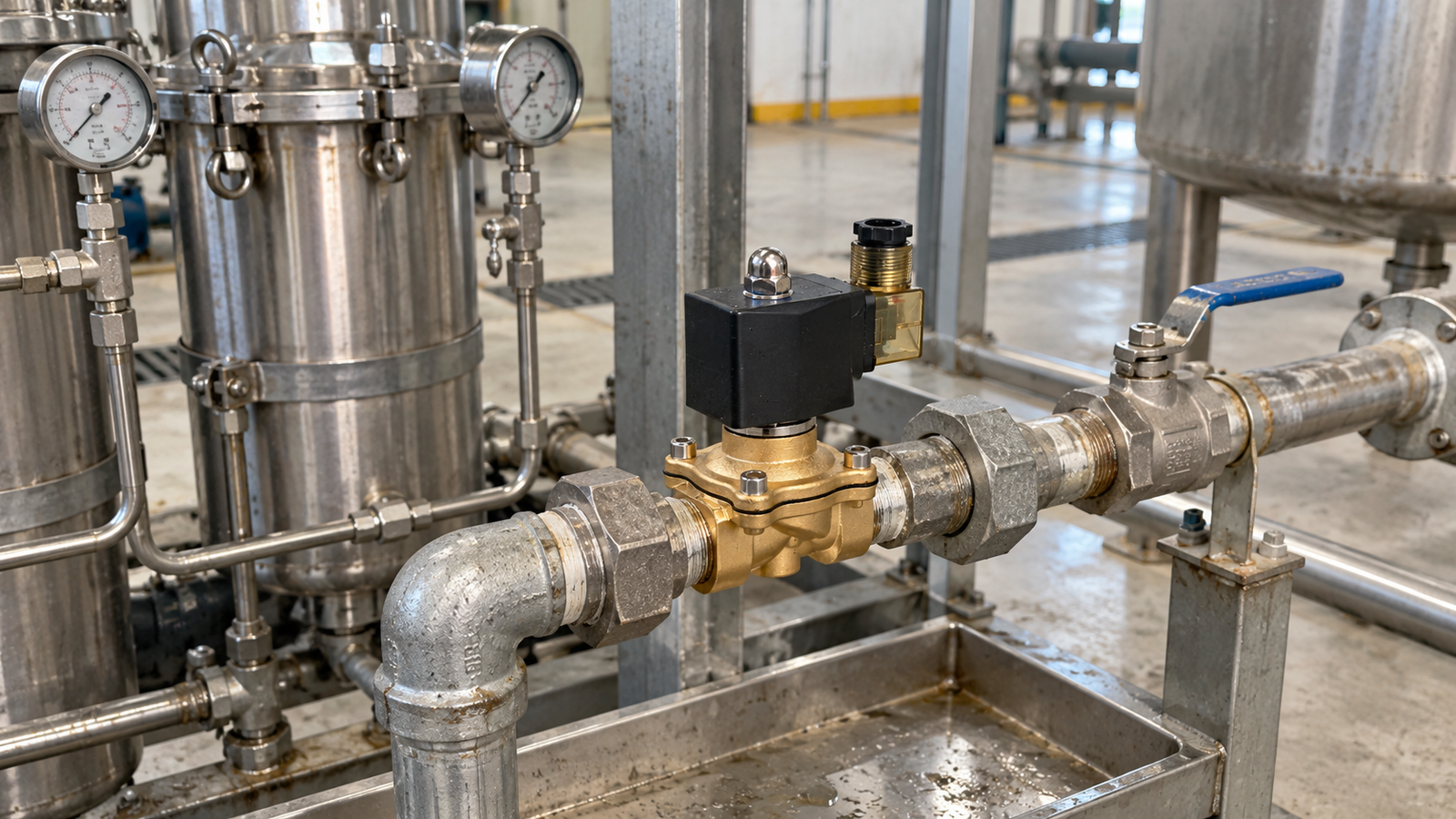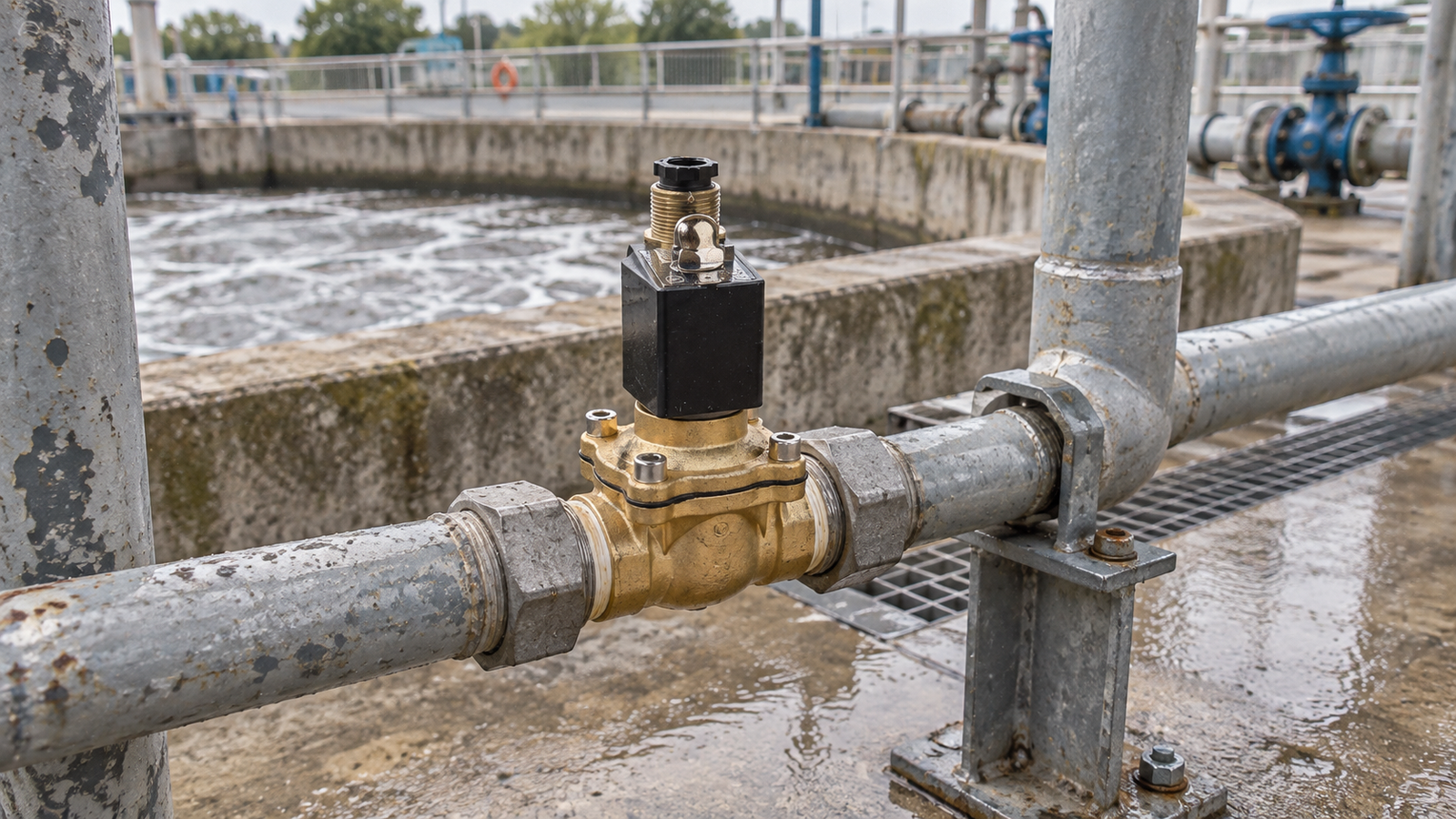
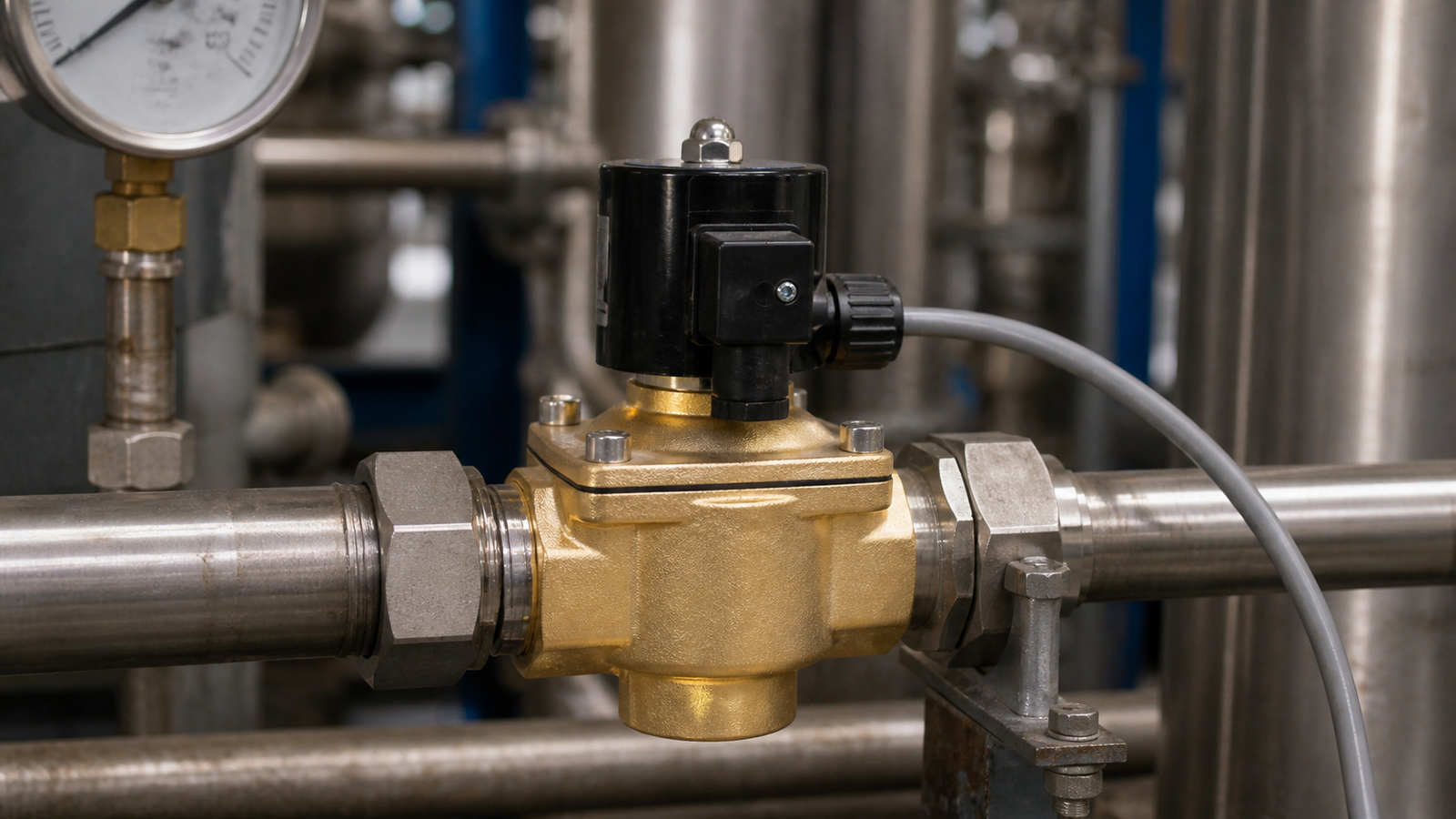
Reliable flow control starts long before a solenoid valve is installed in a pipeline. In a process environment, the valve is only one part of a larger chain that includes media quality, pressure stability, coil protection, installation layout, operator habits, and maintenance discipline. When these elements are treated as a system, solenoid valves can support fast, repeatable switching without becoming a hidden weak point in production.
Start With the Working Medium
The first question is always what the valve will control. Air, water, light oil, steam, gas, and neutral liquid applications each place different demands on internal materials. Brass bodies are widely used for general water, air, and oil service because they offer good mechanical strength and cost efficiency. Stainless steel is often preferred where corrosion resistance, hygiene, or aggressive environments matter more. Plastic valve bodies can be useful where chemical compatibility is the central concern, especially in water treatment and chemical handling lines.
Seal material is just as important as body material. General elastomer seals are suitable for many standard media, while higher temperature or more chemically demanding applications may require alternative sealing materials. A mismatch here can lead to swelling, hardening, leakage, or slow response. The safest approach is to confirm the medium, temperature, and duty conditions together, not separately.
Match Valve Behavior to the Process
Solenoid valves are often selected by connection size alone, but operating principle and system behavior matter more. Direct acting designs are useful where stable operation is needed at low or zero differential pressure. Pilot operated designs can handle larger flow paths efficiently, but they normally require enough pressure difference across the valve to function correctly. Choosing between these approaches should be based on how the line actually behaves during startup, shutdown, and abnormal conditions.
Normally closed valves are common when the safe position is to stop flow. Normally open valves are chosen when flow should continue unless power is applied. This choice is not only a control decision; it is also a safety decision. The valve position during power loss should match the plant’s risk logic and operating procedure.
Installation Details That Protect Performance
Many valve problems begin with installation rather than manufacturing. Direction of flow must follow the body marking. Pipe debris should be cleared before installation, and a suitable filter or strainer should be considered where particles are likely. Thread sealant should be applied carefully so excess material does not enter the valve cavity. Coils need ventilation and should not be buried under insulation unless the application has been designed for it.
Mounting orientation also deserves attention. Some valves tolerate a range of positions, but keeping the coil upright often helps reduce contamination settlement and improves long-term consistency. In outdoor or humid environments, cable glands, coil connectors, and enclosure protection become part of reliability, not accessories.
Control Signals and Coil Protection
The electrical side is sometimes treated as simple on and off control, but it has its own failure modes. Voltage should match the coil rating and remain within an acceptable range during switching. Long cable runs, weak power supplies, and repeated short cycling can cause heat buildup or unstable actuation. For automated systems, the control panel should account for coil load, surge behavior, and environmental exposure.
Heat is one of the most common enemies of coil life. Continuous energizing, high ambient temperature, and poor ventilation can combine into a much harsher condition than expected. Good cabinet design, correct connector sealing, and regular inspection of wiring can prevent many intermittent faults that are otherwise difficult to trace.
Maintenance as a Reliability Habit
A practical maintenance routine does not need to be complicated. Operators should watch for slow response, unusual noise, external leakage, coil discoloration, and changes in downstream flow behavior. Filters should be cleaned before pressure loss affects valve operation. If the medium leaves deposits, inspection intervals should be shortened until the team understands the pattern.
Keeping records helps too. A note about the medium, installation date, observed symptoms, and corrective action can turn repeated issues into visible trends. Over time, this makes spare parts planning easier and reduces the chance that the same installation mistake is repeated on multiple lines.
A System View Pays Back
Industrial solenoid valves are compact components, but their impact is broad. They influence water supply, pneumatic actuation, dosing, drainage, cleaning circuits, and process automation. Treating them as part of a complete flow control system leads to better selection, fewer emergency replacements, and more predictable plant behavior. The best result comes from matching materials, operation, installation, and maintenance to the real conditions of the application.